The Highland bagpipe is one of the few instruments that carries a culture within it — a language, a history, and a ceremonial weight that most tuition never addresses. Ceòlmhor was founded on the conviction that teaching the instrument without teaching that context is to teach it incompletely. The curriculum is built accordingly: structured, progressive, and rooted in the Gàidhlig tradition from the first lesson to the last.
That same conviction extends to performance. Every engagement — whether a wedding ceremony in Edinburgh, a Burns Supper in the Borders, or a corporate occasion anywhere in Scotland — is approached with knowledge of what the music carries and what the occasion demands. Ceòlmhor does not simply provide a piper. It brings the full weight of the tradition to bear on every moment that deserves it.
"The music and its language were never separate."
Meet Your Piper
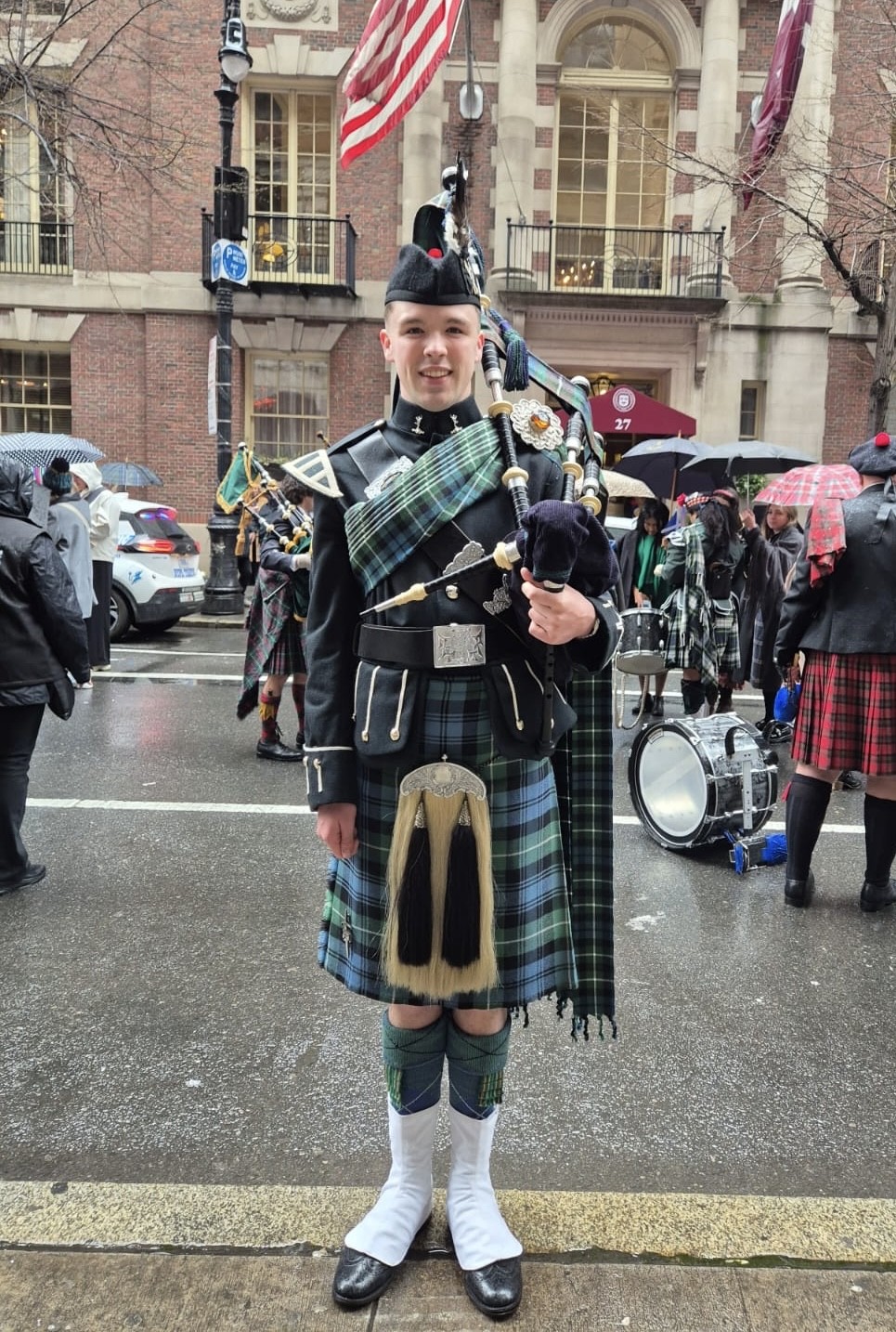
I began on the practice chanter with Fèis Dhùn Èideann — Edinburgh's Gaelic arts festival and tuition organisation — at a time when I was also attending the Gaelic Medium Education primary school in the city. The two things shaped each other. The language and the music arrived together, and I have never thought of them as separate.
The pipes came later — a Christmas present that changed the direction of my musical life. What followed was a balance between school-based tuition, which gave me pipe band grounding and a modern outlook, and Fèis tuition, which kept the traditional and Gàidhlig emphasis at the centre. That balance is what makes me the piper I am today.
Ceòlmhor grew out of that formation — a teaching practice built on the conviction that the instrument and its tradition are inseparable, and that students deserve to be taught both.
Credentials
Armistice Day — Scottish National War Memorial
- Lone Piper at the Armistice Day Service, Scottish National War Memorial, Edinburgh Castle — one of the most ceremonially significant piping engagements in Scotland
Royal Edinburgh Military Tattoo
- Performed with the Royal Edinburgh Military Tattoo from 2024, including the 2026 international tour to Australia and New Zealand — one of the world's most prestigious platforms for Scottish piping
Tartan Day Parades
- Selected to perform at the New York Tartan Day Parade and the inaugural Edinburgh Tartan Day Parade — representing Scottish piping tradition on both sides of the Atlantic
Collaborations
Ceòlmhor works alongside venues, hotels, cultural spaces, and hospitality brands — bringing the full weight of the piping tradition to the occasions and institutions that merit it. From festival stages to boutique hotel residencies, from independent cafés to arts organisations, these partnerships are built on a shared regard for cultural depth, creative integrity, and the kind of atmosphere that only genuine craft can sustain.




Work With Ceòlmhor
Ceòlmhor welcomes partnerships with venues, boutique hotels, independent cafés, festival organisers, arts institutions, and cultural organisations across Scotland. Whether the conversation begins with a live performance, an editorial collaboration, a hotel residency, or a commissioned creative project — this is where it starts.
Start a Conversation